
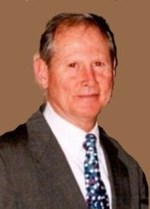
Robert Charles Orr
Robert “Bob” Charles Orr was born January 16, 1934, in Hot Springs, AR to parents Roy Flenniken Orr and Lola Mae Priest Orr. Bob had one brother and two sisters, all of whom are deceased.
He leaves two sons, Robert Orr of Little Rock, AR and Roy Orr of Orting, WA, and his wife, Linda Compton Hodges of Martinsville, VA and stepson, Eric A. Hodges of Durham, NC.
He was an active boxer at the Boys Club in Hot Springs and eventually as a young adult was a Mid-South Golden Gloves Champion. He graduated from Hot Springs High School in 1953 and after a brief term of employment, he joined the Army in 1954 and taught pole climbing. At an exhibition boxing match, he met a friend’s father, who was on the Board of Trustees at LSU. Following the match, he met with Bob and encouraged him to pursue an Honorable Discharge from the Army and join the boxing team at LSU.
Bob was Honorably Discharged in 1955 and entered LSU in 1956. He graduated with a degree in Electrical Engineering in 1959. He was recruited by Boeing and moved to Seattle, WA, where shortly thereafter he was contracted to NASA, which was beginning the Apollo Space Program. Throughout the Apollo program, he served as a lead engineer designing the electrical system for the booster rockets.
Following the Apollo program, he returned to Boeing in Seattle with his younger son, Roy, and worked at Boeing until Roy completed high school and took his own position at Boeing as a Master Machinist. Bob resigned from Boeing once Roy began working, and Bob took a year off to travel the world. He then returned to the U.S. and moved to La Jolla, CA. For several years he worked various kinds of jobs. As an avid athlete all his life, he achieved success in tennis, bowling, skiing, and triathlons. One winter he moved to Steamboat Springs, CO to teach skiing and then returned to La Jolla.
He received his teaching certificate and taught math in a city school in San Diego, CA for a year. As a free spirit, he joined the Peace Corps at age 57 and spent 2 years teaching math in a village 7 miles outside Nairobi, Kenya. After his stint in the Peace Corps, he returned to San Diego, but the culture shock of return was so great he relocated to Arkansas and spent a year pruning his sister’s pecan orchard. He gained employment at North Little Rock Alternative School teaching math and later at North Little Rock High School.
In 1992, at a Singles Sunday School class at the Methodist Church in Little Rock, he met Linda Hodges and after a courtship of nearly 2 years, they married in December 1993. He retired from his teaching position in 1995 to pursue his many athletic endeavors and supported Linda in her role as Dean of the College of Nursing at University of Arkansas for Medical Sciences, where she enjoyed an 18-year career. Following Linda’s retirement, they lived on a lake in Hot Spring Village, AR for 10 years and then moved to Murrells Inlet, SC for 7 years. In 2024, they relocated to Martinsville, VA, where Linda was born.
Bob was a brilliant, kind, and loving man. He and Linda traveled the world and loved exploring the National Parks and spent hours hiking. Bob was baptized in his youth at Central Baptist Church in Hot Springs, AR, and throughout his life he would join the church as he and Linda moved from place to place.
The family thanks Bob’s caretaker and angel, Jeanette Harris, and her family for the superior care and love received in the last 2 months of his life.
A memorial service will be held at Central Baptist Church Hot Springs, Arkansas at a later date.
McKee-Stone Funeral Home, Martinsville, Va. is serving the family. To express condolences online, please visit www.collinsmckeestonemartinsville.com.
The documentary below was authored by Bob Orr and details his thoughts during the last minute prior to the launch of the Saturn V in 1967.
Seconds to Launch
At four A.M. on a muggy Florida morning in July 1967, the countdown was T-60 seconds for the first launch of the gigantic Saturn V. Fuel tank Pressurization of the thirty-three-foot diameter, elephantine booster had begun. In two years, a sister blast would provide the initial shove toward the historic first moon walk.
T-45 seconds, the wispy breath of oxygen behind exhaled by the liquid oxygen,or LOX tank, suddenly disappeared. I was not alarmed because I knew it was time for pressurization of the LOX tank.
T-30 seconds, I glanced at the current monitors for the powerful internal batteries and with a feeling of pride in my knowledge, watched them spring to life, indicating that power transfer had been completed. For the remaining life of the booster, approximately three minutes, all electrical power would be provided by them.
T-20 seconds, the intertank umbilical was yanked from the greedy monster, depriving it from further LOX feasting.
T-10 seconds, and events would occur rapidly now. The well fingered schematics of the booster and its ground equipment were resting on my lap, unneeded. For the past four years, I had worked closely with NASA and other Boeing engineers developing these control circuits.
T-6 seconds, a foggy cloud belched from each engine in sequence. The bright orange flames indicating ignition could barely be seen through the haze from my vantage point in the control room a mile away. The main LOX valves were fully open now, soon to be followed by the fuel valves.
T-2 seconds, I crossed my fingers as the abort circuit I designed three years before was now alert and capable of terminating the launch. The vibrations and sounds never before heard now reached me shaking the building as if it were in the grasp of an angry animal. I was certain the thick glass panels protecting me would shake loose as the mammoth, seven and a half million pounds of thrust, struggled against its restraints.
T-0, the booster eased from the grasp of the tower, shook the ground a final time with its mighty exhaust, flung its cargo into the heavens and fell sighing into the sea.
Bob Orr